
What Actually is Economics?
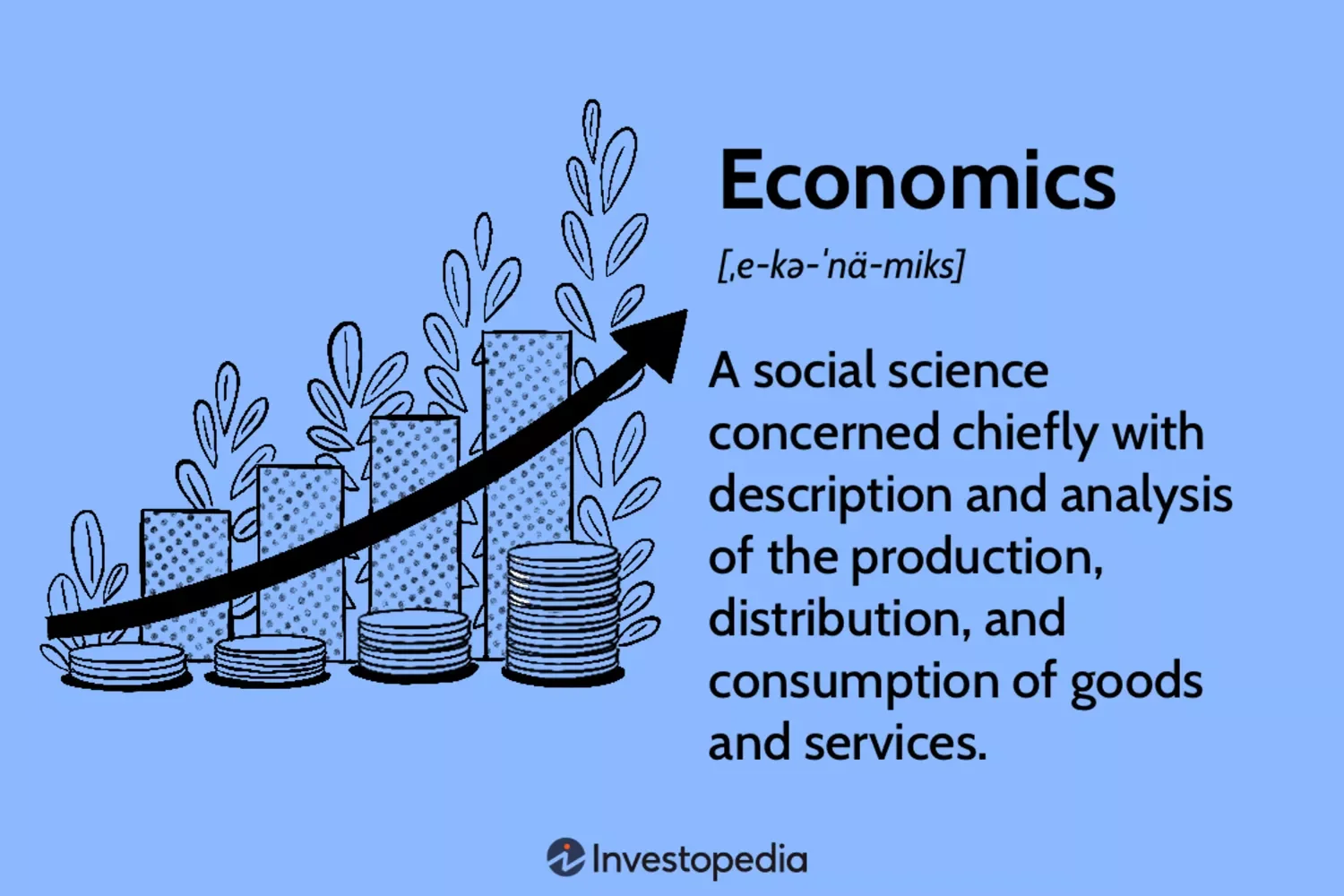
It is not hard to find a definition for economics. Google, your dictionary, your high school and college textbooks alike, every single one of those will have some variety of a similar definition. For the sake of this article, I’ll show you the Merriam Webster definition, which is “a social science concerned chiefly with description and analysis of the production, distribution, and consumption of goods and services.” And to the credit of Merriam Webster, that is a very reasonable and “complete” definition. It covers all of the aspects of the fields that you would need if you were to gleam over the field of study. It’s a social science, there’s analysis, and they even got 2 of the key components of GDP in there. Though I’m going to argue that Economics is something else entirely, at the exact same time. Economics, from my eyes, is the science of making, observing, and framing relationships.
I’ve had some variety of this exact conversation with basically all of my uncles and aunts when I told them I was an Economics major. “Oh you’re studying Econ? I bet you have a really good stock portfolio!” or “Econ major, huh? Isn’t that basically just business?” And I can’t really get mad at them for thinking this way, because the world has done a really poor job at showing people what Economics really is. When we read about it in the news, it’s always about the relationship between interest rates and unemployment and inflation and so on. It’s pretty reasonable to imagine how Econ would be explicitly linked to fields in business.
But you’ll notice that I used the word relationship there. How these things are all related is the important part. Economics is the means by which we find out by how much are all these things related.
There’s an economics paper I read for a class a while ago that really stuck with me, because of the way that the paper made me think about the field of Economics as a whole. I’m going to properly cite the paper in a second, but first I want you to engage in a thought exercise with me, that I think will help me illustrate my point.
In the 1990s, there was a measurable decrease in the crime rate. What do you think the reason for that is?
I’m sure you have a whole host of reasons in your head that you came up with on the spot. The president, increased police presence, higher quality of life, cheaper prices, and so on and so on. And while any combination of these things have the possibility of being true, Donohue and Levitt (2001) found that a significant reason for that was the legalization of abortion in the early 70s. They went through a whole process to establish this in their paper
Now I’m going to change the framing of the question for you;
In the 70s, abortion was legalized. What effect do you think this had on the crime rate?
To which you would probably be more likely to reasonably guess the results of the paper. (A decrease in crime)
That is what economics is.
Economics is making observations about the world we live in, seeing how a series of those observations are related to each other, and proving to the rest of the world how they’re related. That is how I view economics, and it really does let you see a little bit of economics everywhere in the world.
Works Cited
Written by: Ryan Hazbun
Donohue, John J., III, and Steven D. Levitt. "The Impact of Legalized Abortion on Crime." The Quarterly Journal of Economics, vol. 116, no. 2, 2001, pp. 379–420.
"Economics." Merriam-Webster.com Dictionary, Merriam-Webster, www.merriam-webster.com/dictionary/economics. Accessed 8 Sept. 2026.